



























Testimonial Tuesday: Accepted to the University of Chicago
/
Maddie reached out to let me know that she got a full ride to UChicago after applying early action. I’m so proud to share her process and testimonial!
Read MoreThe Personal Approach to the Personal Statement
The latest news, tips, & tricks for surviving college admissions.
The “Why this college?” supplement is actually one of the hardest essays to answer.
If you’ve already tried my 5 “why this college” essay tips and are still feeling stuck, here are a few journaling and research questions I give my students to help them discover the deeper reasons they want to attend each school, without resorting to generic clichés.
1) Use specific examples to explain your struggles
Successful essay excerpt: “Growing up in a small, conservative community, it's easy to be shoved into your own category if you don't look or act like everyone else. My hair and eyes, instead of being blonde and blue like all of my Czech classmates, were chocolate and espresso. My last name had a "z" in it, and my grandmother called me "mija." By the time I was in grade school, the teasing began, and I was hurt and confused. Didn't all grandmothers call their grandchildren "mija"? Why did everyone except for me have blue eyes? And why was I being called "dirty Mexican" when I was cleaner than the boy who made the remark?” Christina, Yale Class of 2022
Why this works: This paragraph highlights how easy it is to be ostracized in your community due to your external differences. Christina was proud to be Hispanic, but the consistent bullying she received from her peers made it hard for her to keep that perspective on her heritage. This section of her essay portrays her struggle with racism and she later uses it to show her evolution of understanding her own culture as well as that of people around her.
In fact, just because it’s a shorter supplement doesn’t mean you should leave it for last. The “Why this college?” supplement is actually one of the hardest essays to answer. Ideally, you would’ve visited the campus, researched the school, and spoken to former alums to really know the answer. But not everyone has the privilege (or money) to travel to see schools — especially in the middle of a global pandemic. Luckily, I have some shortcuts for you.
Over the years, I’ve read and edited hundreds of college application essays. I’ve seen the good and bad (and very bad). Discover how to avoid the Common App essay's most common mistakes.
1) Using Bloated Thesaurus Speak
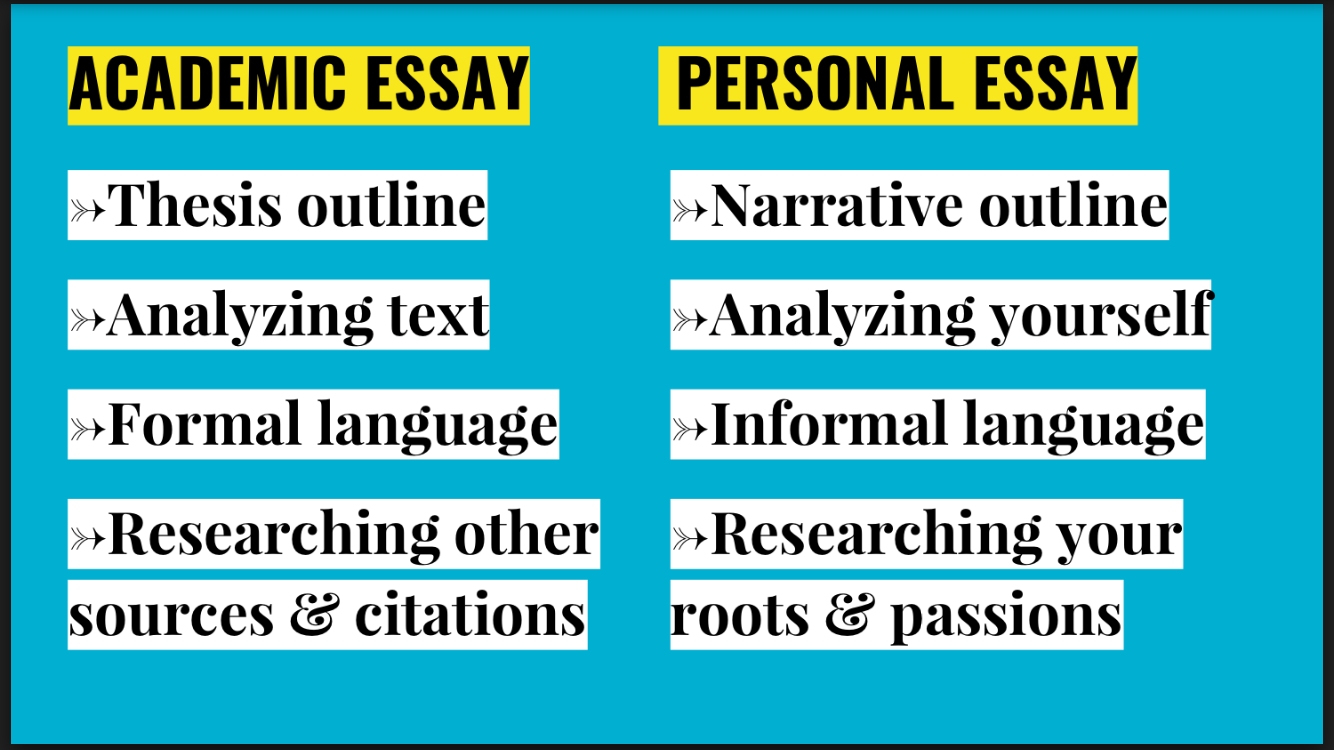
Most students think a higher vocabulary (read: thesaurus) will make their essay sound better. That instinct may work for your more formal academic essays, but it’s wrong in the case of the personal statement: the essay should sound how you speak, not a formal academic letter. "Thenceforward" and “heretofore,” for example, seem way too formal and almost sound funny in this personal context. Would you ever use those words in real life? Didn’t think so.
The grammar list below is great to look out for when you're proofreading your admissions essay. I’ve had so many students make the dangling modifier mistake, in addition to the faulty quotation mark punctuation. But you should find comfort that even published authors make the same mistakes! Everyone needs help with their grammar sometimes, especially since it often takes a new pair of eyes to spot typos, because yours have already gotten habituated to your words.
1) Start a Journal
The hardest thing about a personal essay is finding your voice—most high schools focus on the academic essay, which is more stiff and formulaic than the admissions essay. An easy way to discover what you sound like when you're not citing academic sources or analyzing text is to start a journal. Every night before bed, take a few minutes to write about your day or what's worrying you or even try some of the prompts in the Common App. The relaxing background should let you tap into your personal voice without the pressure of sounding academic. At the very least, you'll have some snippets saved away for the draft writing stage.
At this point in your academic career, you’ve heard of the creative writing mantra — show, don’t tell. You want the admissions officers to live out the story as you did by engaging them in every nitty-gritty detail. But what does that actually mean and how do you do that? I broke down the technique in five easy-to-follow suggestions from admissions essays that worked.
Before writing about your non-profit for your personal statement, read these red flags that can pop up to admissions officers. Your personal statement is supposed to tell a story of genuine growth. Be honest with yourself: how invested are you in your non-profit? If it doesn’t capture everything you’re about, consider saving it for a supplement.
So, you’ve been revising until your eyes gloss over? Words are all starting to look the same and you’re reciting your admissions essay in your sleep? Professional authors spend a long time figuring out just what proofreading process works for them.
Here’s the trick for the last step of this writing process: start off with plenty of material (don’t worry about word count until that whole story is there on the page) and then get ready to polish it using the following tips.
Break The Essay Down Into Smaller Goals
Just thinking of writing the enire personal statement in its entirety is pretty overwhelming. Instead, create smaller, less-stressful goals. Start with brainstorming topic ideas, then journal some outline ideas, then try writing the first paragraph. If you’re still stuck, start with just a sentence. The important thing is to just start: the magic is in the revision process. No one — not even your favorite published author — weaves gold on the first try.
This memoir is a beautiful account of surviving an extreme Mormon survivalist sect so against the “government” that she grew up without a birth certificate. Westover details being forced to do dangerous hard labor as a kid and being abused by an older brother whose mental health issues are ignored and denied. The story is ultimately inspiring: She went on to graduate from Cambridge with a history PhD.
Good for: Writing about a complicated family upbringing
Get inspired by: Great examples of deep self-reflection and answering the “why.” Westover has had years to process what happened to her (hopefully with therapy), so she is able to describe her past in a way that is deep but not accusatory. When writing about abuse, the tone is really important in showing how you overcame the adversity, and Westover’s descriptions are a good example of showing hurt without sounding bitter, which is a hard balance to strike when writing about something so personal.
I’ve noticed an alarming trend among my students.
The one-giant-block-of-text essay. The no-paragraph-breaks essay. The good-god-my-eyes-are-going-to-bleed-if-I-read-this essay.
My big piece of advice is not only to separate your essay into multiple, distinct paragraphs, but also to separate each paragraph with smooth transitions and topic sentences that help the reader follow along with your narrative. Better yet, aim for short and sweet paragraphs for easy reading. Remember that admissions officers are going through 100s of these essays a day — don’t make it harder for them to concentrate with one dizzying block of text that’s difficult to read.
The additional information section of the common app is an extra opportunity to help stand out to the college admissions officers. This section is great for explaining any discrepancies between your grades & disciplinary behavior that don’t align with your character but still might be on your record, and that hasn’t been mentioned elsewhere in your application. Even if you feel like you have nothing else to say, do not submit your application without utilizing this extra space.
My general answer to this is no for multiple reasons. First, the essay should reflect who you are separate from this short period of time in your life (unless it greatly impacted your life in an indelible way). We should get a snapshot of your personality and character separate from the past 6 months. Second, there is a risk of trend saturation as many students will feel tempted to write about this.
Of course, there are exceptions to every rule. To find out if you should write about Coronavirus in your personal essay, see how you’d answer the questions below.
Aha, you’ve written your first draft. Congratulations! This is the hard part. Now, give it a breather and put it away for a few days at least so your words will seem fresh for the revision process.
First, look for repetitions.
Are you using the same word over and over? (Everyone has their own personal crutch). If you're a vocab savant, check for other repetitions like, are your sentences all periodic and using the same construction? Like life, good writing needs variety.
1) Go back to your opening anecdote
If you used the creative writing technique of an opening anecdote, one fun way to close your essay can be returning to that same story in your concluding paragraph. For example, if your opening narrative was about the first economics class you took and how it was love at first equation, you can try describing the thrill of the class in the same creative ways that you did the opening. Try writing vivid examples and really get us to feel like we are in your place. What was it like on the first day of class? What did it feel like doing your homework? Interacting with other Econ students? Was it like an aha moment where you finally felt something click, like this is what I was meant to do? Try revisiting that opening anecdote with a new perspective at the end.
What makes a great (admissions) essay?
Something totally real and unpretentious. Admissions officers want to get know the real you apart from a dizzying algorithm of numbers, extracurricular hours, and GPAs. Give them a slice of life that reveals who you are instead of something fake that you think sounds good. I wrote about cooking with my grandma—so simple it's almost cliche. But I used that anecdote to explore my immigrant identity and show what I’ve overcome.
Andrew’s editing process happened after he finished writing for a reason. Editing for word count should come in the final stages when you feel like you’ve told your whole story. Take as many words as you need to tell your truth. Then, refine and edit with each draft. (Yes, plan on writing multiple drafts and revisions - that’s how good writing happens!). By your fourth draft, you can start to think about editing for word count.
2) Start exploring your passions
Freshman year is all about figuring out what you love to do. Ideally, you'd spend the next four years honing that passion, developing your talents, and growing into a leadership position that you can write about for a supplemental college essay. Use your freshman year to explore all of your interests so that by junior year, you're signing up for less clubs and really building your leadership in those. Don't wait until later in high school to figure out what you love: admissions officers want to see commitment and leadership in a few clubs, not just a list of extracurriculars you're somewhat involved in.
Use Old-School Pen & Paper
I recommend the old-school writing technique of journaling: pen and paper, when you are relaxed (like before going to bed). At this point, you need to write more than you think and this is a great way of silencing your inner critic. Journaling also has proven therapeutic benefits, so it will help you write your way through whatever you’re going through.
The Hollywood cheating scandal has caused widespread outrage—and for good reason. I wrote about the issues inherent in the college-industrial complex for Business Insider, from my perspective as both an admissions essay guru and as a senior who went through the application process myself.
Though my essay is more op-ed than personal statement, I thought it would still be helpful to share the writing techniques I used to help you with your personal essay:
1) Set A Time Limit For Your First Draft
The thing most students struggle with is how to open their personal essay. There is a lot of pressure as this is your first impression. In general, you want to employ creative writing techniques. Make us feel like you felt when all this was happening, including the confusion, the frustration.
Below are some proven techniques I give my students, but here’s the good news: your opener may be buried somewhere deeper in the essay and it just takes a seasoned editor to point it out. Don’t stress and just write - you might not find your opening until the 3rd revision, so give yourself enough time to revise.
First, print out your essay and write in the margin next to every paragraph what each paragraph is about in 2-3 words (“tension with heritage,” for example). If you’re having trouble summarizing what each paragraph is about, go back and rewrite it. Once you’re done with this exercise, you’ll be able to see which paragraphs are superfluous and which are worth keeping.
You spent months perfecting your essay, going through multiple revisions and edits. You've cut the cliches and got it down to word count. You've finessed the opening and closing lines to eye-catching perfection. Everyone from your counselor to your mom's cousin twice removed has proofread it and given it their seal of approval. Maybe you've even hired a guru or two to give it the professional once (or twice) over.
Now all you have to do is click submit, right? And then you'll breathe the sweet victory of completion.
Most high schools focus on teaching you the academic essay: you know, thesis statement, supporting paragraphs, and a closing paragraph summarizing the above. There is a pretty exact formula you have to stick with and not much room for creativity. Your tone is overly formal and you are expected to cite and analyze texts for a unique argument and conclusion. The good news: You spend 4 years learning this academic skill, which is helpful and will be what you are expected to write in college.
Maddie reached out to let me know that she got a full ride to UChicago after applying early action. I’m so proud to share her process and testimonial!
Read MorePowered by Squarespace.
Overusing adverbs (basically, essentially, actually) means that your verbs are not strong enough on their own. Wordy phrases and fragments slow down your narrative. Pedantic words like “myriad” and “plethora” should only be used if you know what they mean - otherwise you come across as someone disingenuous who used athesaurus to sound smarter (something admissions officers can easily see through.)
Inspired by Karyn, here are a few more things I would add to your admissions essay checklist for before you submit: