

























What High School Doesn't Teach You About The Admissions Essay
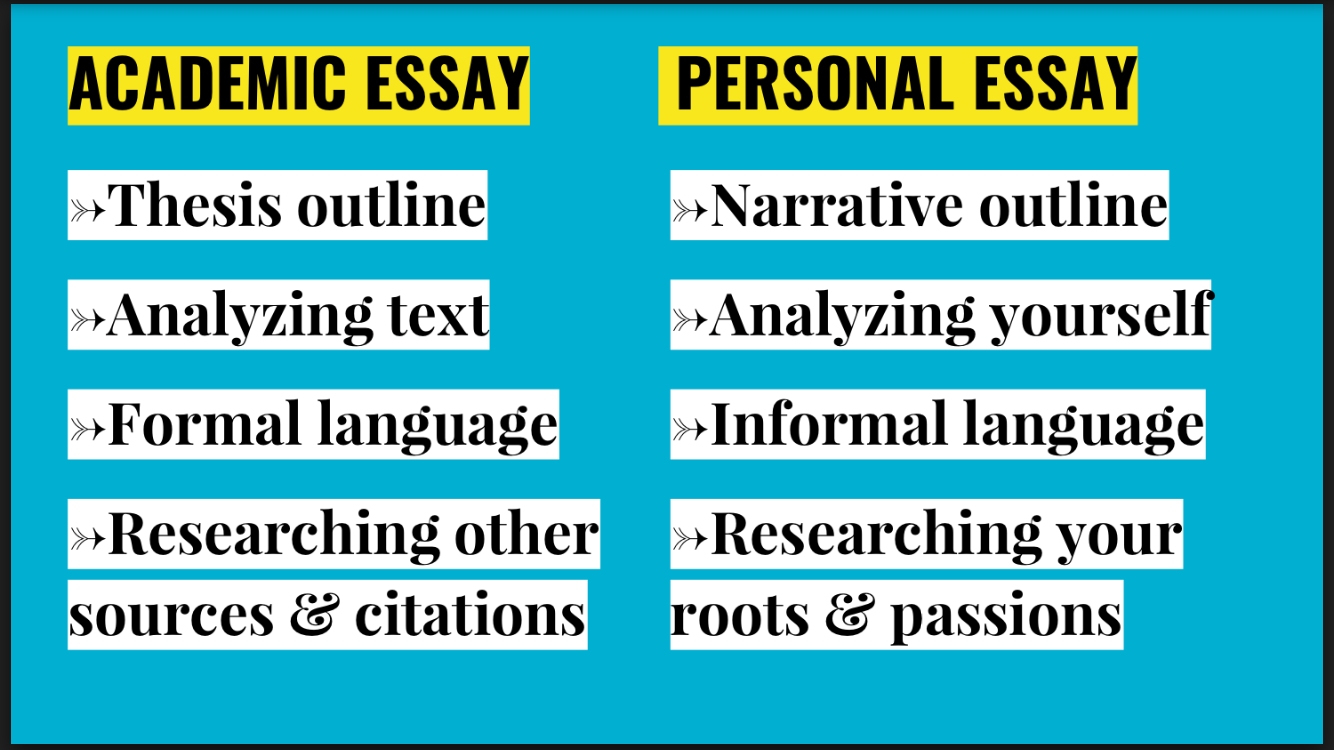
/Most high schools focus on teaching you the academic essay: you know, thesis statement, supporting paragraphs, and a closing paragraph summarizing the above. There is a pretty exact formula you have to stick with and not much room for creativity. Your tone is overly formal and you are expected to cite and analyze texts for a unique argument and conclusion. The good news: You spend 4 years learning this academic skill, which is helpful and will be what you are expected to write in college.
The bad news: Unfortunately, that's the exact opposite of a personal essay, which is what you are expected to write to get into college.
The personal essay is considered creative writing, so there is no one-stop-shop format. You are analyzing yourself, not outside texts. There is no thesis or argument you have to prove. You are expected to have a narrative of some kind, or a story to tell about yourself, but there is no requirement to tell it chronologically. Ideally, your personal essay will have an arc to it, where you learn something about yourself or the world around you, but you can start at the end or the middle.
And hardest of all, the tone is informal and meant to sound like you in real life, not the stuffy, formal you in academia.
This is why the personal essay is so difficult for most students. If you can, try taking a creative writing elective so you're not totally caught off guard. If you can't, start journaling regularly so you get used to writing about yourself and finding your true voice.

Over the years, I’ve read and edited hundreds of college application essays. I’ve seen the good and bad (and very bad). Discover how to avoid the Common App essay's most common mistakes.
1) Using Bloated Thesaurus Speak
Most students think a higher vocabulary (read: thesaurus) will make their essay sound better. That instinct may work for your more formal academic essays, but it’s wrong in the case of the personal statement: the essay should sound how you speak, not a formal academic letter. "Thenceforward" and “heretofore,” for example, seem way too formal and almost sound funny in this personal context. Would you ever use those words in real life? Didn’t think so.